Membrane boxes: 5 steps to choosing the right solution
Is a membrane box really a matter of intuition?
What happens if the part is slightly asymmetrical? Or if a pin protrudes a few millimetres?
How do you know whether the diaphragm is exerting too much or too little tension?
On the contrary, choosing the right membrane box is not a matter of intuition.
This is precise reasoning, based on concrete technical parameters: dimensions, shape, height and mass.
This means that every detail has a direct impact on the stability and protection of your components, whether in transport, storage or display.
Here are some guidelines to help you select the right membrane-holding solution for your parts, without compromising on safety.
1. Measure the widest part of the part
In practice, a technical part is almost never perfectly symmetrical. To guarantee optimum support in a membrane box, it's essential to start from the actual dimension.
First of all, make sure you follow these basic rules:
Maximum part length + 40 mm → corresponds to the outside length of the box
Maximum part width + 40 mm → corresponds to the outside width of the box
Maximum part height + 10 mm, multiplied by two. This calculation determines the correct box height.
These margins allow the part to rest naturally in the membrane. They prevent excessive compression, while guaranteeing reliable immobilization.
2. Select box shape
In addition, the shape of the membrane box plays a key role in the overall stability of the product.
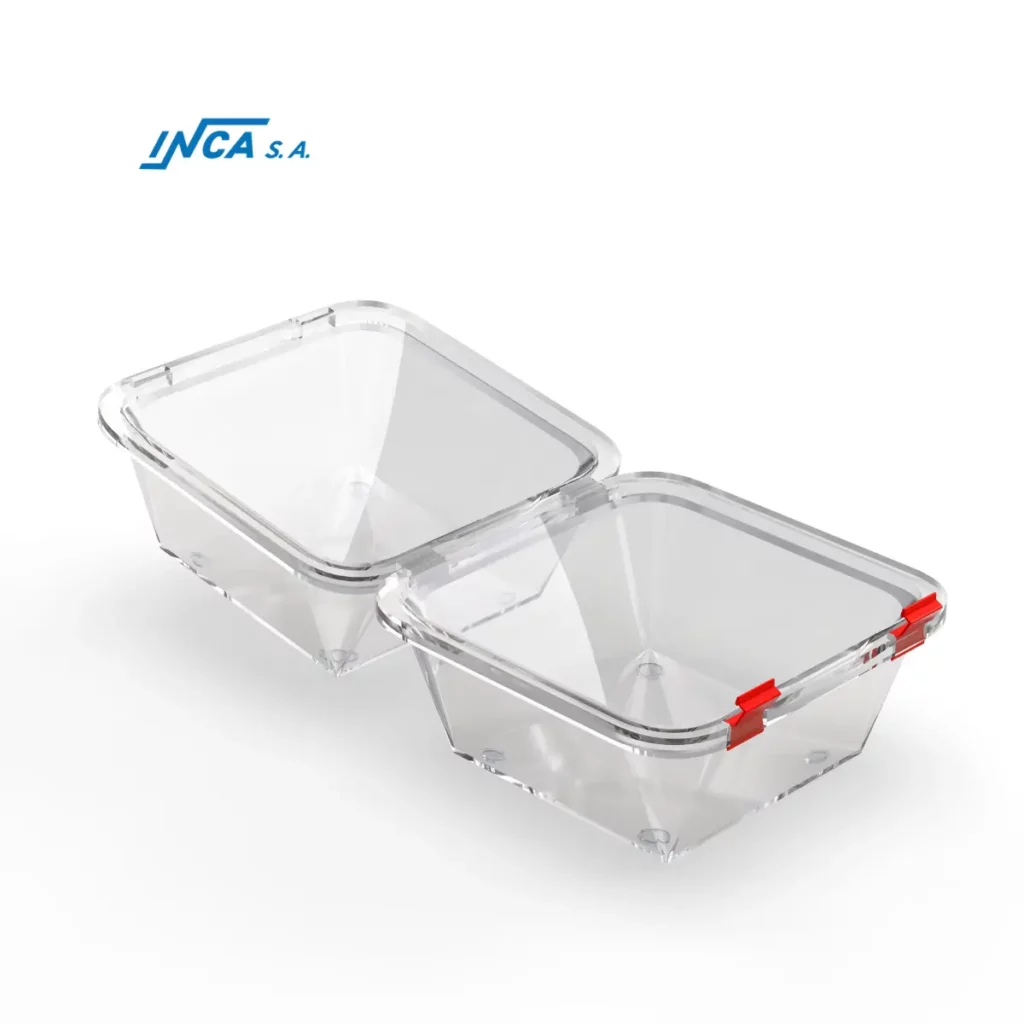
Our membrane boxes are available in widths from 4 cm upwards. Sizes up to 1 meter can be made to special order. They come in standard shapes, as well as more complex ones, to suit a variety of uses.
Here are our general recommendations:
- Square or round box: ideal for small, regular, compact or symmetrical parts.
- Rectangular box: perfect for long components, such as rods, tools, cylindrical parts or elongated prototypes.
- Large volume: recommended for bulky parts or complex technical assemblies.
In all cases, the objective remains the same: to give the membrane the space it needs to effectively stabilize the part.
3. Adapting height to mass and relief
Box height is often underestimated. However, it directly conditions load distribution in the diaphragm. Inadequate height limits the diaphragm's ability to function properly.
Best practices :
- For lightweight parts, a standard height is sufficient.
- For a heavy or dense part, it's best to choose a taller box to distribute the mass more evenly.
- For an irregular part or one with a fragile relief, it's best to select a height capable of absorbing the relief without constraint.
The right height improves membrane durability and the overall performance of membrane packaging.
4. A membrane designed to protect
Can a membrane scratch the part?
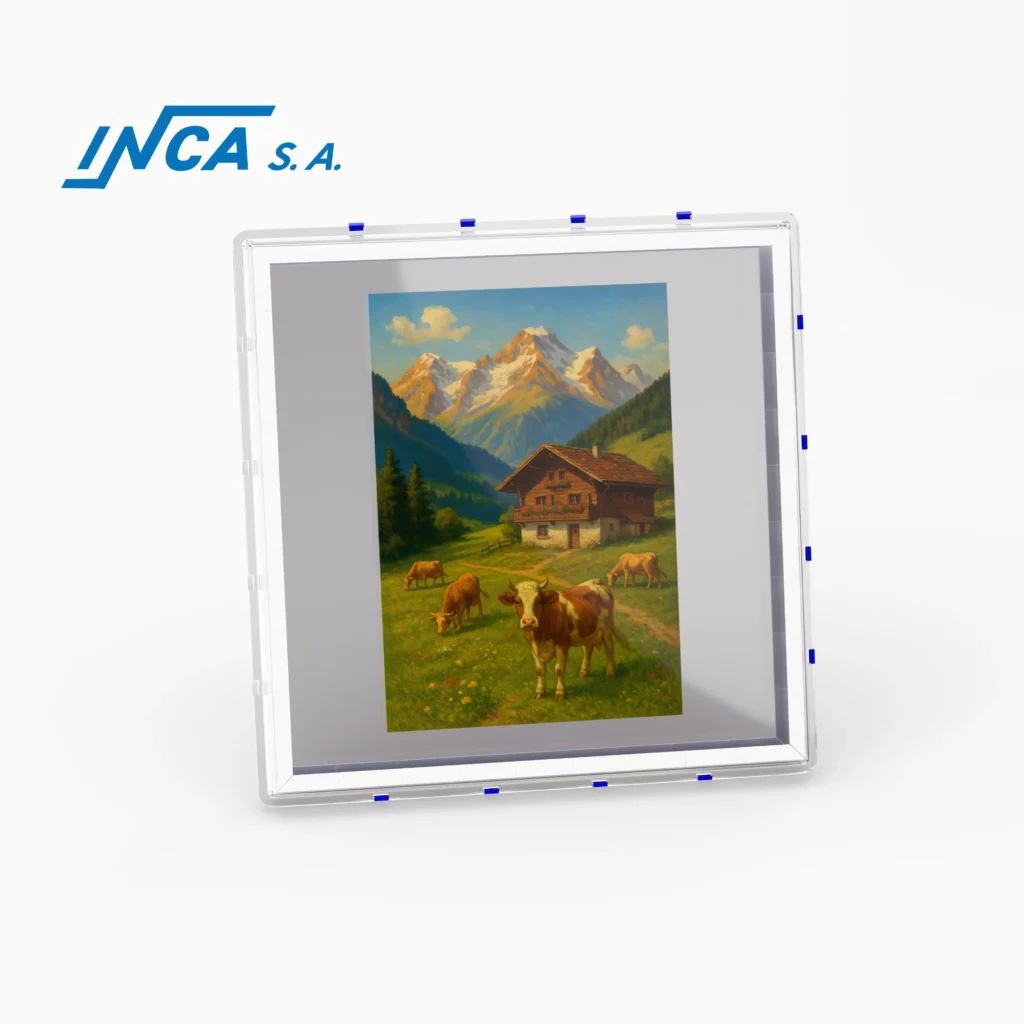
The membrane is designed to protect objects without causing scratches or marking.
It holds the part in place without crushing it, while ensuring effective immobilization. What's more, friction is not a risk when the box is correctly sized.
5. If you have any doubts about our membrane boxes, ask us for advice
Finally, there are some parts for which there are no standard rules. This is particularly the case for complex geometries, high weights or sensitive surfaces.
In this case, there's no need to guess. On a daily basis, our teams help our customers choose the membrane box best suited to their needs and constraints.
A box protects. The right membrane box secures.
Do you have any doubts about choosing a membrane box, or do you need personalized advice for your components?